
🦠 The Scroll of Tiny Bugs — How They Live and Play in Bodyland 🦠
Anaerobes — The Bugs That Can’t Breathe Fresh Air
Some tiny bugs in Bodyland don’t like fresh air. These are called anaerobes.
- Clostridium, Bacteroides, Fusobacterium, Actinomyces israelii: These are examples of anaerobes — bugs that live without air.
- Catalase and superoxide dismutase: Helpers that some bugs use to fight harmful sparks. Anaerobes lack these helpers and so are sensitive to air damage.
- Foul smelling: Anaerobes often make stinky smells like rotten eggs — because they produce gases like CO₂ and H₂.
- Difficult to culture: It’s hard to grow anaerobes in the lab because they don’t like air.
Remember: Anaerobes Can’t Breathe Fresh Air.
Facultative Anaerobes — The Flexible Bugs
These bugs can use oxygen if it’s there, but can also live without it. They can make energy in more than one way!
Examples include Streptococci, Staphylococci, and other enteric gram-negative bacteria.
Intracellular Bacteria — The Secret Sneaky Bugs
Obligate Intracellular
These bugs must live inside other cells to survive.
Examples: Rickettsia, Chlamydia, Coxiella.
They stay inside cells when it’s Really Chilly and Cold.
Facultative Intracellular
These bugs can live inside or outside cells, depending on conditions.
Examples: Salmonella, Neisseria, Brucella, Mycobacterium, Listeria, Francisella, Legionella, Yersinia pestis.
Some nasty bugs may live facultatively!
Encapsulated Bacteria — The Shiny Armor Bugs
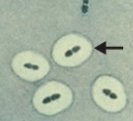
Some bugs wear a shiny capsule — like armor — that helps them hide from Bodyland’s defenders.
- Pseudomonas aeruginosa
- Streptococcus pneumoniae
- Haemophilus influenzae type b
- Neisseria meningitidis
- Escherichia coli
- Salmonella
- Klebsiella pneumoniae
- Group B Streptococcus
The capsule is made of polysaccharide + protein and acts as a trick to avoid being eaten by immune cells.
Mnemonic: “Please SHINE my SKiS”
- P = Pseudomonas aeruginosa
- S = Streptococcus pneumoniae
- H = Haemophilus influenzae
- I = Neisseria meningitidis
- N = Neisseria meningitidis (repeated to help memory)
- E = Escherichia coli
- S = Salmonella
- K = Klebsiella pneumoniae
- S = Group B Streptococcus
People without spleens (asplenia) have trouble fighting these bugs and need vaccines.
Urease-Positive Organisms — The Pee CHUNKSS Bugs
These bugs make an enzyme called urease that breaks down urea, making ammonia and gas, which can cause stones in the body.
Examples include Proteus, Cryptococcus, H. pylori, Ureaplasma, Nocardia, Klebsiella, S. epidermidis, and S. saprophyticus.
God’s Hand in Bodyland
All these tiny bugs, their tricks, and their homes are part of the amazing design by the greatest Scientist — Jesus Christ, the silent programmer, anatomist, biochemist, physiologist, and Creator of Bodyland’s wonders.
✝️ “In Him all things hold together.” – Colossians 1:17
This scroll honors the One who made every breath, and every home with love — Jesus Christ, the Eternal Scientist of Bodyland.